1. What are the issues behind oil as a resource?
To start of I would like to emphasise that oil forms the basis of the world’s economy. Without it the world economy would look completely different. Oil is not just used for transport and energy production. Oil or components of oil are key ingredients for certain medications, plastics and much more.
In my opinion oil dependence is here to stay for the foreseeable future. While the burning of oil is a much more critical issue. Oil is a finite resource and will run out at some point. Reducing the oil used for combustion engines gives scientists more time to find a solution for the other areas where oil is used.
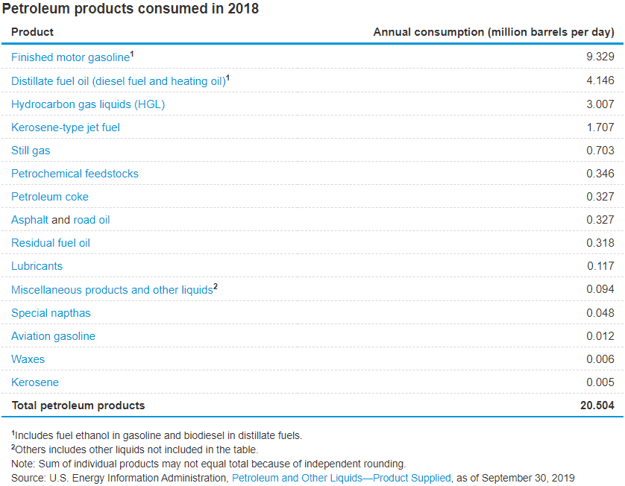
https://www.eia.gov/energyexplained/oil-and-petroleum-products/use-of-oil.php
Mining oil is a hazardous endeavour, leaks can occur and pollute or oceans and land. Sometimes pipelines leak which leads to negative effects on the environment. Accidents like deep water horizon come to mind when talking about pumping oil. The most hazardous way of mining oil might be fracking where a liquid is pumped into the ground in order to crack the layers and extract the oil. This became very popular and controversial during high oil prices. When the oil prices go up, mining companies will resort to more damaging and expensive ways to extract oil to boost their profits.
Oil can be found all over the world and is the cause of many international disputes for example in Antarctica the south china sea. There are three inherent geopolitical issues related to oil. The first one is security of supply; most countries have strategic oil reserves to weather high prices or use in exceptional situations like war. Related to this is the access to oil every country needs access to it and strive to have access. This can be seen in Chinese dominance and claims in the south Chinese sea. Lastly is the lasting impact of oil on the environment.
2. How to promote sustainable resources while staying profitable?
For a company staying profitable is the main goal. Companies dealing with natural resources which can be scarce and/or non-renewable have an inherent need to use them as efficiently as possible. As an example, Pepsi reduced the amount of water needed to produce one litre of Pepsi from fourteen down to 2.2 litre. Reducing amounts of resources needed leads to a lower production cost. Products can than be sold at the same price point as there less sustainable counterparts.
In recent years the demand for more ethical and sustainable products has increased. Often these products have a higher price. Some people are willing to pay these higher prices. Usually for a company production cost is marginally higher depending on what product.
Companies can take several steps to become more sustainable. The first option is starting with a large investment. This is an expansive way of radically changing the way a company works and the way they produce their product. This high setup costs leads to longer term benefits such as lower production prices.
A second option is to slowly start becoming more sustainable. Smalls steps towards a more efficient or green way of production. Analysing where the problems are and what points can be improved. These get solved step by step until the goals are reached.
Farmers are a prime example where sustainability has a big advantage. When lands are worked to intensively or the wrong way the soil will degrade, and nutrients will no longer be enough. This causes reduced productivity.
3. What would make consumers more sustainable resources?
First, there needs to be awareness of the alternatives. If people don’t know that there is an alternative these wouldn’t be used as much. This has changed a lot especially in Europe and China. For Europe it’s a way of cleaning up the excesses and wastes we have in our lifestyle. China on the other hand sees it as the next step in their economy. With their large population which has a rapidly growing middle-class China is being proactive. Due to their strict governing of the people and the economy they can make changes rapidly and decisively. Every five years the government plans with economic goals for the next five years. First it was focused on economic development as it is a need in order to create a higher standard of living. Now it is shifting to a more sustainable growth in order to keep their standard going.
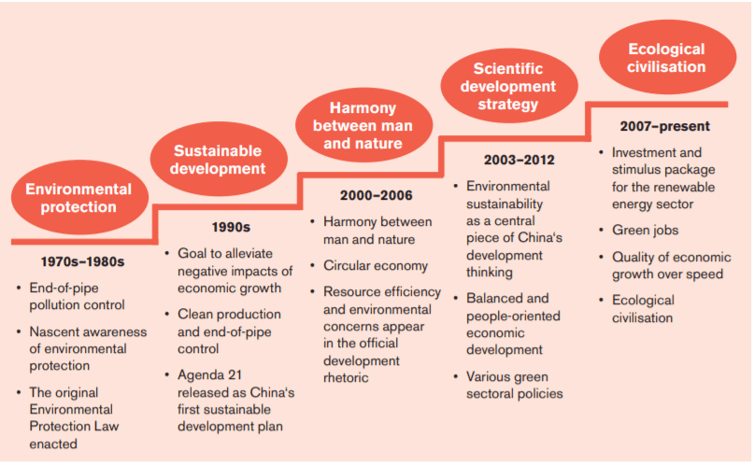
In my opinion governments should push harder for a more sustainable economy however this can’t be done in every country. Developing countries need to first have a stable and secure economy before they can work on their environmental impact. When you are focused on just surviving you can’t be expected to do everything in a sustainable way.
In my opinion price points of more sustainable alternatives are in some cases to high in comparison with their normal version. This affects the lower classes most. In order to have a widespread adoption the prices would need to decrease to be competitive.
Some alternatives might have a larger effect on the environment than people thing. A prime example of this are the electric cars. A German research showed that (adac 2019) a mid-sized electric car in Germany would have to drive 219000km for it to be cleaner than an equivalent modern diesel car. This is largely due to their energy production mix which relies heavily on coal. This leads to some issues as cars in Europe usually last for about 180000km and the batteries of electric vehicles don’t last long enough. Add on top of the scarce and toxic resources needed to build the batteries and you end up better off driving a diesel car.
Sources:
US Energy and information administration. 2019. Oil: crude and petroleum products explained: https://www.eia.gov/energyexplained/oil-and-petroleum-products/use-of-oil.php, Accessed on 28/02/20
Molchanov, M. 2012. Petroleum geopolitics. https://www.researchgate.net/publication/310706579_Petroleum_geopolitics. Accessed on 28/02/20
Haanaes, K, Michael, D, Jurgens, J, Rangan, S. 2013. Making Sustainability Profitable. https://hbr.org/2013/03/making-sustainability-profitable. Accessed on 28/02/20
Hans-Werner, S. The guardian. 2019. Are electric vehicles really so climate friendly. https://www.theguardian.com/environment/2019/nov/25/are-electric-vehicles-really-so-climate-friendly. Accessed on 28/02/20
Krogher, T. ADAC. 10/2019. Elektroautos brauchen die Energiewende: Die Klimabilanz. https://www.adac.de/verkehr/tanken-kraftstoff-antrieb/alternative-antriebe/klimabilanz/. Accessed on 28/02/20
Xiaoxue, W, Zhanfeng, D, Qiong Wu,Ying Qin. 02/2015. China’s path to a green economy Decoding China’s green economy concepts and policies. https://pubs.iied.org/pdfs/16582IIED.pdf. Accessed on 28/02/20
 Robbe's blog